Warren Gardens
101 Toylsome Lane, Southampton · the planting guide
Front of House15
Trees1
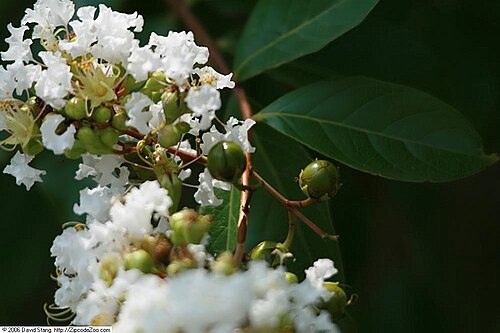
Natchez White Crape Myrtle
Lagerstroemia indica fauriei 'Natchez'
Jul–Sepwhite bloomexfoliating cinnamon bark
2 specimens — 16ft & 14ft multi-stem · 20–25ft tall × 15–20ft wide · Multi-stem vase form
Massive pure-white panicles bloom from midsummer through early fall — 'Natchez' is reliably the longest-blooming crape myrtle and one of the finest. Off-season the exquisitely exfoliating cinnamon-and-gray bark glows against winter skies, making this a four-season tree. The two multi-stem specimens will frame the front walk with graceful vase-form canopies at 20–25ft.
Hydrangeas2
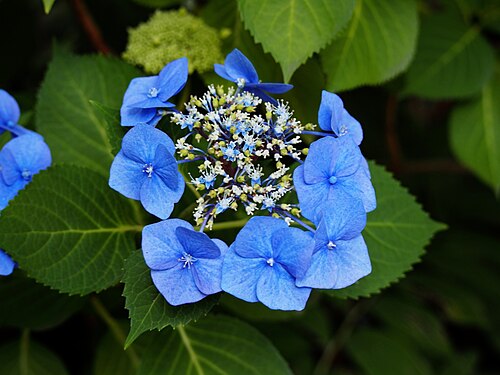
Blue Wave Hydrangea
Hydrangea macrophylla 'Blue Wave'
Jun–Sepviolet-blue lacecap
7 plants at 5ft spread · 4–5ft tall × 5–6ft wide
A classic lacecap hydrangea with flat, open flower heads — a ring of large sterile florets in luminous violet-blue surrounding a cloud of tiny fertile flowers. In Southampton's acidic soils the color deepens toward rich cobalt. The open lacecap structure is more refined than a mophead, casting delicate shadows against walls and paving.
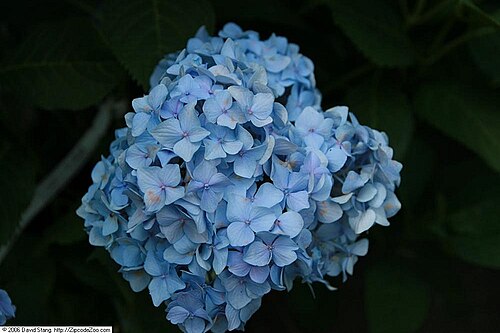
Nikko Blue Hydrangea
Hydrangea macrophylla 'Nikko Blue'
Jun–Sepcornflower blue mophead
11 plants at 3ft · 3–4ft initial, growing to 5ft+
The quintessential mophead hydrangea, producing globe-shaped heads in clear saturated blue that intensifies year over year as the soil's natural acidity works its magic. Eleven plants massed along the front will read as a continuous blue ribbon from the road. Reliable, vigorous, and beloved for good reason.
Structural Shrubs2
Boxwood — TBD Selection
Buxus sempervirens
Selection pending
Allowance for boxwood edging and globe forms throughout the front garden. Specific count and placement per Lydia's design. Dense, evergreen, and permanent — the dark structural backbone against which every flower is set.
Hydrangea — Additional Selection
Hydrangea spp.
Selection pending
Additional hydrangea allowance ($2,200) for supplemental plants or variety additions as the front border is refined. Specific selection with Lydia.
Perennials — Blue & Moody10
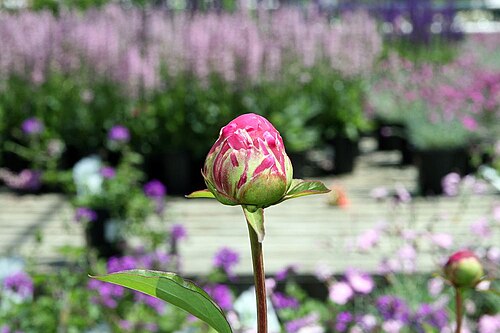
Peony 'Karl Rosenfield'
Paeonia lactiflora
May–Junred
2.5–3ft × 3ft
Rich saturated crimson-magenta double blooms — one of the deepest notes in the palette. Strong stems, no staking needed, intoxicating fragrance. Foliage deepens to burgundy in autumn.
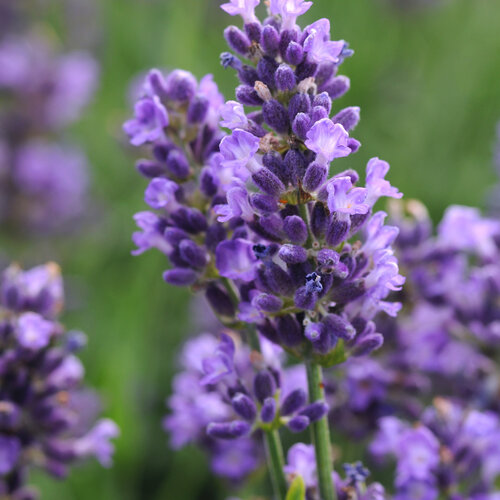
Lavender 'Super Blue'
Lavandula angustifolia
Jun–Augblue
18–24in × 18–24in
Intensely colored English lavender with deep violet-blue spikes and silvery aromatic foliage beautiful even out of bloom. Thrives in sandy coastal soils. Every pass along the path releases its fragrance.
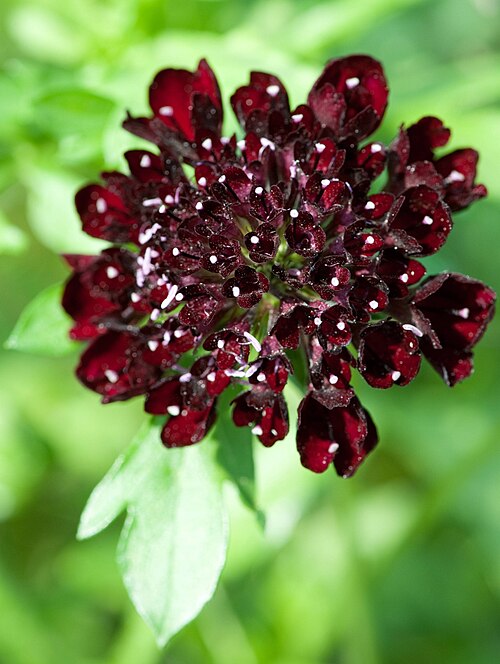
Scabiosa 'Dark Knight'
Scabiosa caucasica
Jun–Sepdeep violet
18–24in × 18in
Among the darkest flowers in the garden — brooding near-black purple pincushion blooms on long wiry stems that dance in any breeze. Blooms prolifically all summer if deadheaded. The definitive dramatic note in the moody palette.
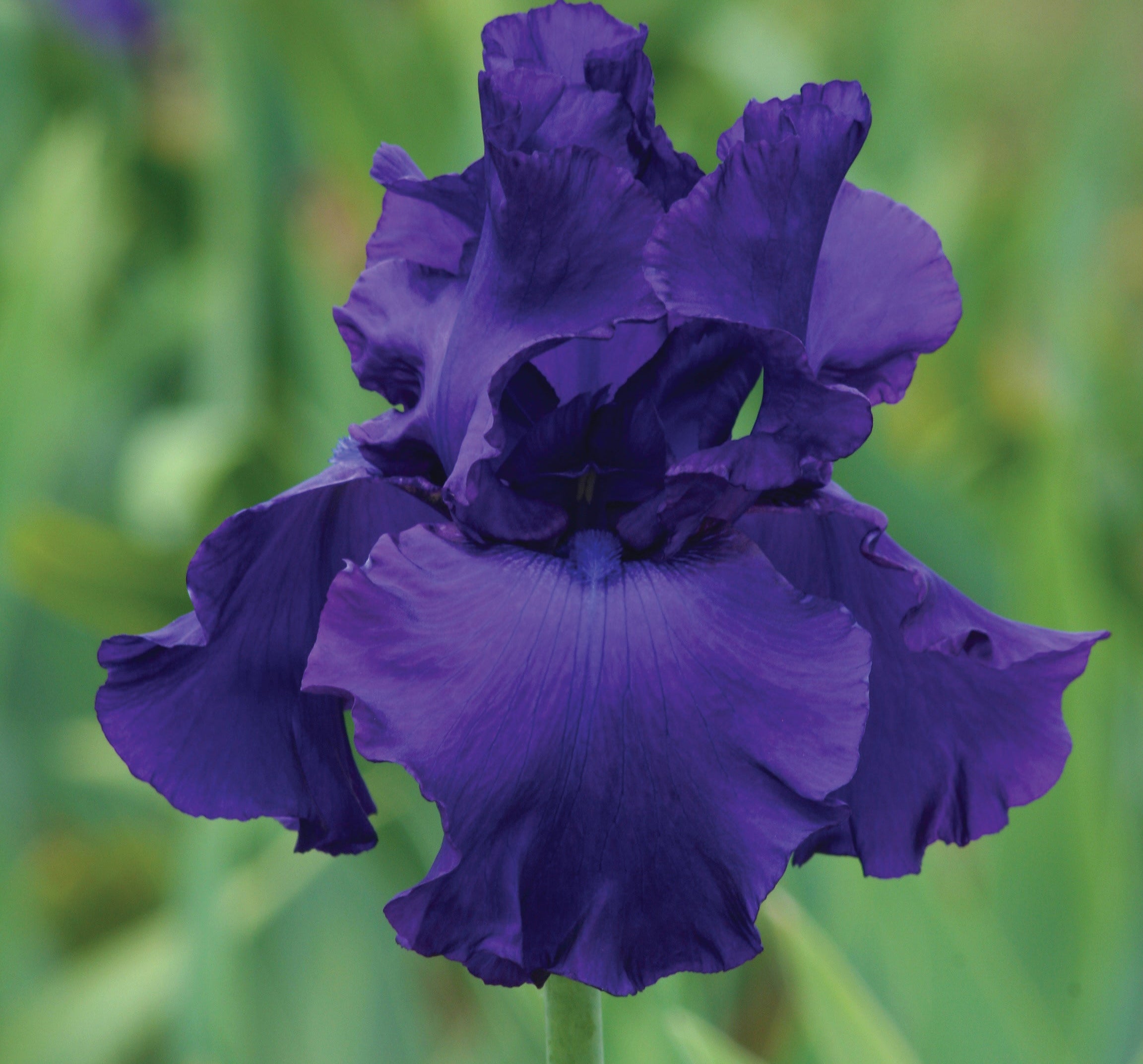
Iris 'Titans Glory'
Iris germanica
May–Jundeep violet
3–3.5ft tall
Enormous tall bearded iris flowers in pure saturated violet-purple — genuinely electric in the late-spring border. The upright sword-like foliage provides architectural structure through the whole season.
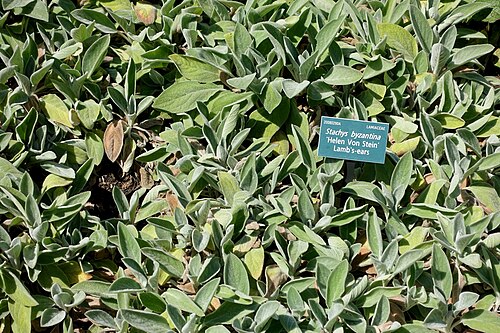
Lamb's Ear 'Helen von Stein'
Stachys byzantina
Apr–Octlight yellow
12–18in tall × 18–24in wide (foliage)
Dramatically large, velvety-soft silver-gray leaves that are essentially flowers in their own right. This low-blooming variety is all about the foliage — the luminous silver ground plane that makes every color beside it sing. The visual mortar of the Blue & Moody border.
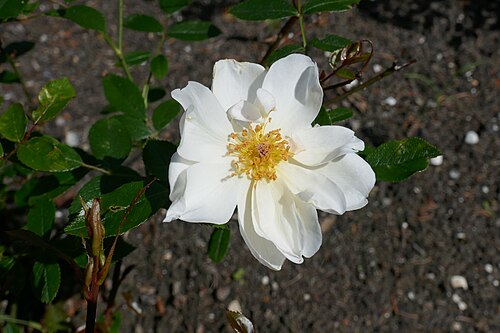
Rosa 'Crystal Fairy'
Rosa 'Crystal Fairy'
Jun–Seppalelight red
Climbing to 8–12ft
Cascading clusters of very double white flowers with the faintest blush center — an effect of white lace draped over its support. Profusely blooming with classic old-rose fragrance. Appears in both Front and Terrace palettes, lending continuity across the garden.
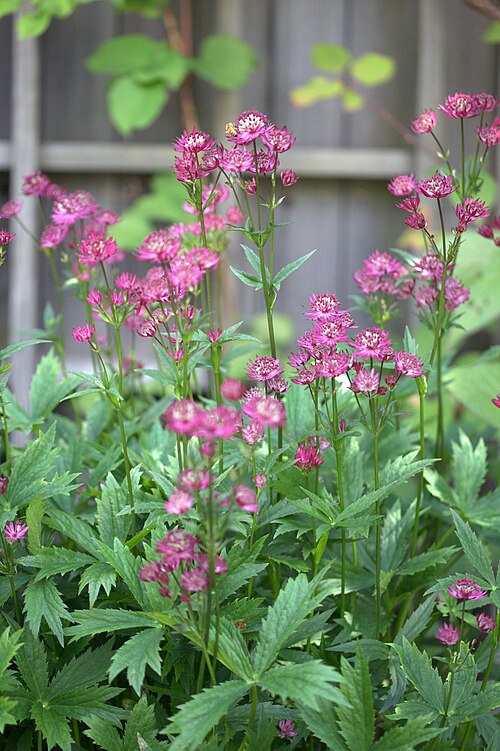
Astrantia 'Star of Fire'
Astrantia major
Jun–Augredlight orange
18–24in × 18in
Deep glowing crimson masterwort flowers surrounded by a pale starburst collar of bracts — somewhere between a Tudor rose and a jeweled brooch. Brings an elegant, slightly old-world botanical quality to the front border.
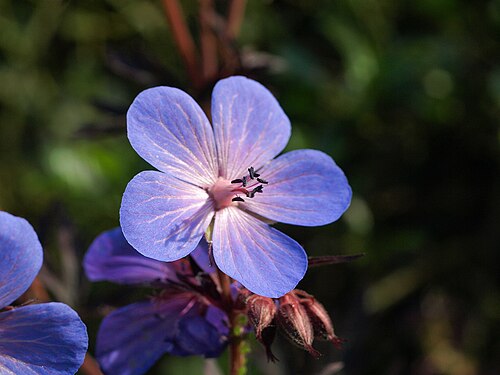
Geranium 'Rozanne'
Geranium 'Rozanne'
May–Octbluewhite
18in tall × 24–36in wide (sprawling)
RHS Plant of the Centenary — Rozanne blooms continuously from late spring until hard frost, producing violet-blue flowers with a white eye. It sprawls graciously through neighboring plants, weaving six months of color through the whole border.
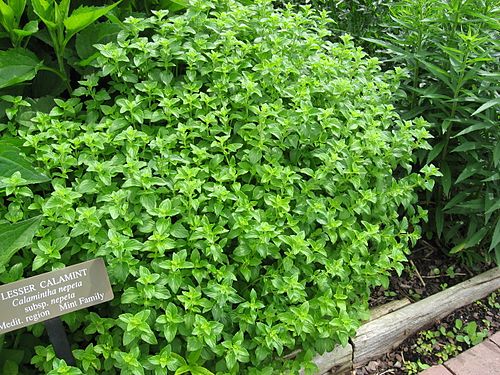
Calamintha
Calamintha nepeta
Jul–Octlight blue
12–18in × 18–24in
An airy cloud of tiny pale lavender-white flowers loved by bees and butterflies. When brushed the foliage releases a refreshing minty fragrance. Front-of-border froth that softens edges and connects larger plants, thriving in sandy coastal soils.
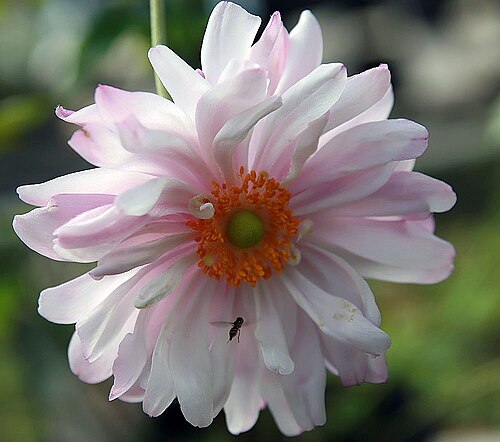
Anemone 'Queen Charlotte'
Anemone × hybrida
Aug–Octlight red
3–4ft × 2–3ft · Semi-double warm rose-pink flowers that bloom precisely when the summer perennials begin to tire — August through October. They float on tall wiry stems with characteristic nodding grace, carrying the border beautifully into fall.
Late-season anchor for the front border.
Middle Garden61
Trees4
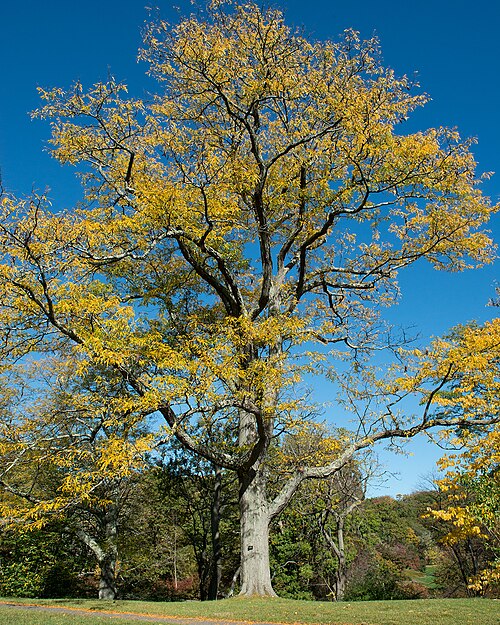
Thornless Honeylocust
Gleditsia triacanthos inermis
Jun, Octchartreuseyellow
1 specimen — 13in caliper · 30–40ft in garden context · High-canopied specimen shade tree · The 13-inch caliper honeylocust is the largest single specimen in the collection — a genuine legacy tree. Its fine pinnate foliage filters light like no other species, casting dappled radiance that illuminates everything beneath it. In autumn the canopy turns clear luminous gold before dropping quickly and cleanly.
The crown jewel of the collection. The signature tree of the rear terrace.
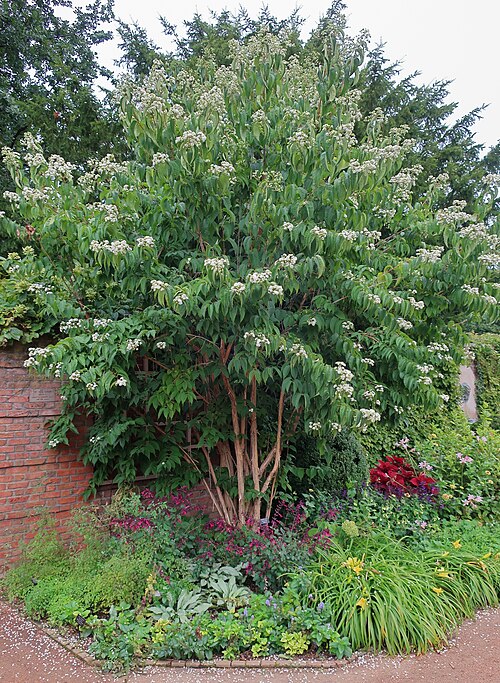
Seven Son Tree
Heptacodium miconioides
Sep–Novwhitelight orange
1 specimen — 16ft · 15–20ft × 10–15ft · Multi-stem
One of the most rewarding small trees in American horticulture — the Seven Son Tree blooms when almost nothing else does, in September, with fragrant white clusters that then transform into showier papery rose-red calyces persisting through November. Exfoliating cinnamon bark adds winter interest. Two display seasons in one tree.
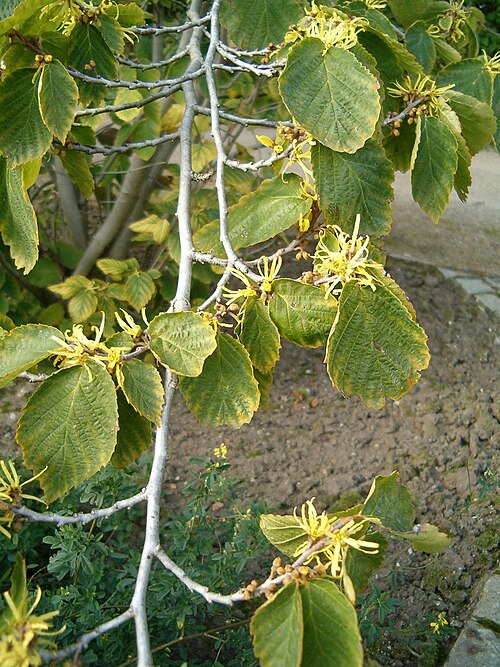
American Witchhazel
Hamamelis virginiana
Jan, Oct–Decyellow
1 specimen — 10ft × 10ft · 10–15ft × 10–15ft · Rounded multi-stem · The garden's ambassador of winter — witchhazel blooms November through January, producing spidery fragrant yellow flowers on bare branches that are utterly unexpected and deeply beautiful. Brilliant orange-yellow fall color arrives first. The specimen size (10×10ft) means it arrives as a fully mature presence.
Only winter-blooming tree in the collection. Plant where the subtle fragrance can be encountered on the path.
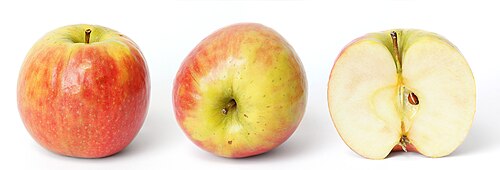
Edible Apple
Malus sylvestris domestica (variety TBD)
Apr–May, Aug–Octpalered
1 specimen · 15–25ft depending on rootstock
The orchard anchor — spring clouds of fragrant pink-white blossom followed by summer fruit developing through harvest in autumn. A specimen apple of ornamental and productive character. An apple tree in an American country garden is as fundamental as the garden itself.
Japanese Dogwoods1
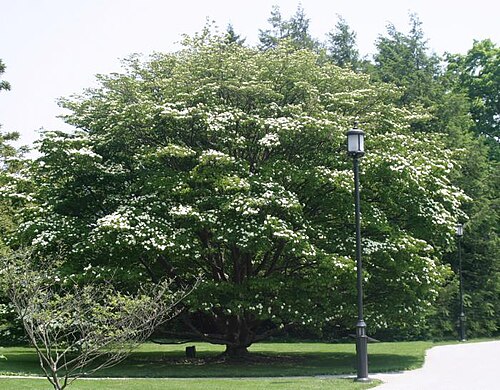
Japanese Dogwood
Cornus kousa
Jun, Aug–Octwhiteredred
Named specimens + $21,000 grove allowance · 15–25ft × 15–20ft · Wide layered canopy · Among the most beautiful four-season trees available — June white bracts cover every branch for three to four weeks, then August brings curious red strawberry-like fruits, autumn delivers scarlet-crimson foliage, and winter reveals handsome tan-and-gray patterned bark. A grove of Cornus kousa is planned as one of the rear garden's defining features. 'Milky Way Select' is notably heavy-flowering.
Multiple trees including 10–12ft specimen, 'Milky Way Select' 3in caliper, and grove allowance.
Evergreen Specimens & Conifers8
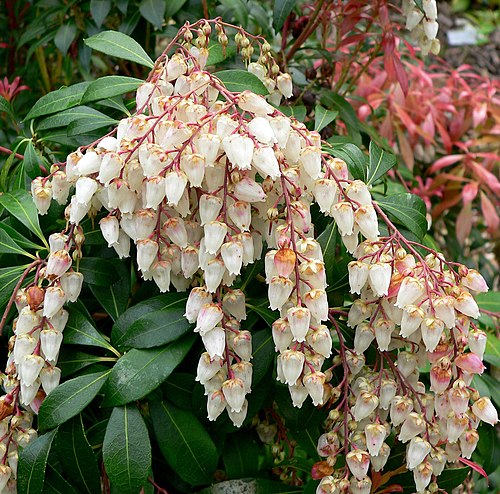
Japanese Andromeda
Pieris japonica
Mar–Aprwhitered
1 specimen · 6–12ft · Broadleaf evergreen
Spring white flower chains AND brilliant orange-scarlet new growth unfurling through spring — two simultaneous displays of extraordinary beauty. A premier broadleaf evergreen, glossy and refined year-round. New growth from red-tinted buds in late winter announces the season.
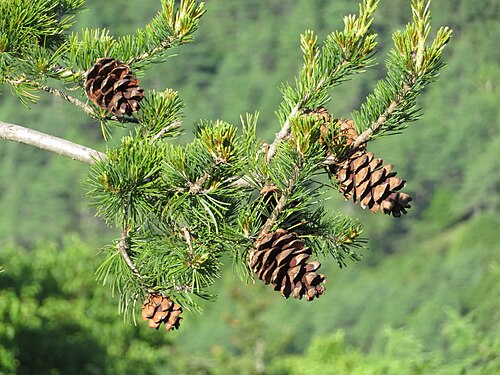
Japanese White Pine 'Glauca Brevifolia'
Pinus parviflora 'Glauca Brevifolia'
Year-roundbluedeep green
1 specimen — 8.5ft × 12ft hindupan · 8.5ft tall × 12ft wide (installed) · Slow-growing
A spectacular sculpture in living form — blue-silver twisted needles catch light in constant motion, and the wide spreading hindupan habit creates an immediately mature, ancient-feeling presence. This collector's tree, selected for its particular character, will be the most remarked-upon specimen in the garden.
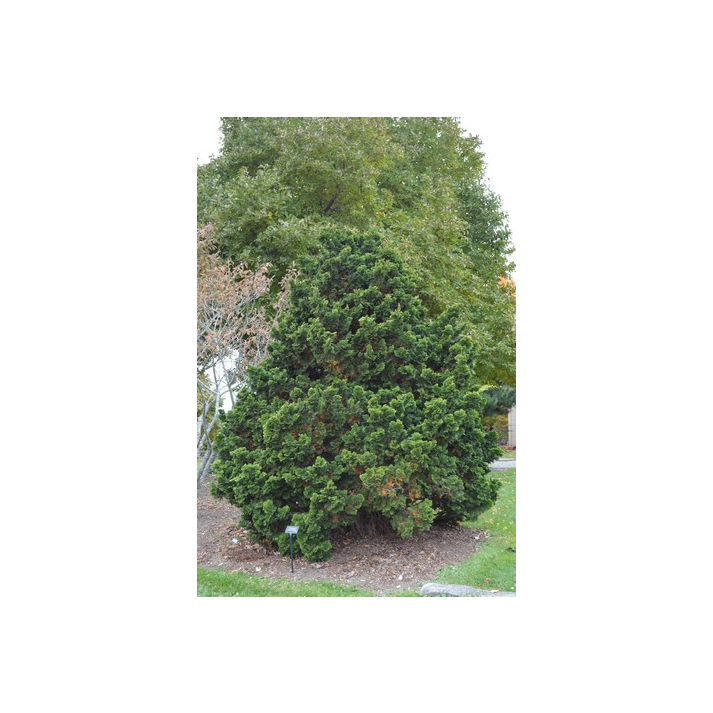
Hinoki Falsecypress — Pom Pom
Chamaecyparis obtusa (trained)
Year-rounddeep greenchartreuse
1 specimen — 11ft · 11ft tall (maintained) · Year-round interest
Dense green foliage sculpted into distinct rounded cloud-forms — the niwaki style of Japanese garden art. At 11 feet this is a substantial, immediately commanding living sculpture. These trained forms take decades to develop; it will be formal, timeless, and impossible to replicate quickly.
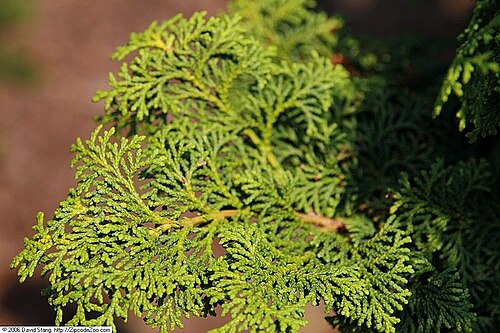
Hinoki Falsecypress 'Kosterii'
Chamaecyparis obtusa 'Kosterii'
Year-rounddeep greenchartreuse
2 specimens — 5.5–6ft × 7–8ft · 5–7ft tall × 7–9ft wide
Broadly mounding with distinctive fan-shaped pendulous sprays of deep green foliage and golden highlights. Growing wider than tall, these two specimens create substantial weeping cloud forms. Evergreen, structural, and four-season in value.
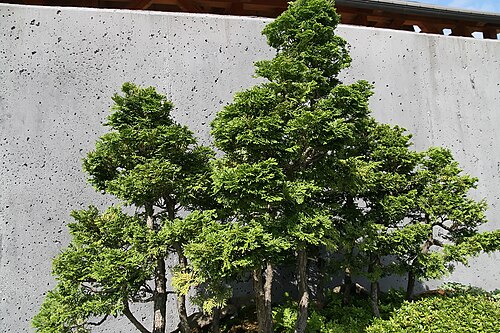
Hinoki Falsecypress 'Nana Gracilis'
Chamaecyparis obtusa 'Nana Gracilis'
Year-rounddeep green
1 specimen — 8–9ft · 8–9ft tall × 5–7ft wide
Overlapping shell-like fans of the deepest, richest green arranged in a tiered organic silhouette. A specimen that has taken 20+ years to reach its size, providing an almost meditative presence — serene, unchanging, permanent. Grows very slowly.
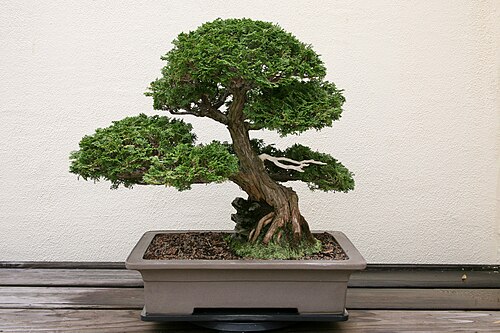
Hinoki Falsecypress 'Bonsai'
Chamaecyparis obtusa 'Bonsai'
Year-rounddeep green
1 specimen — 6ft × 4.5–5ft · 6ft tall × 4.5–5ft wide · Slow-growing
A naturally dwarf, dense globular falsecypress with particularly fine-textured lace-like foliage. Rounder and more formal than the Nana Gracilis, it provides a compact evergreen presence with its own distinct character — tightly knit and refined.
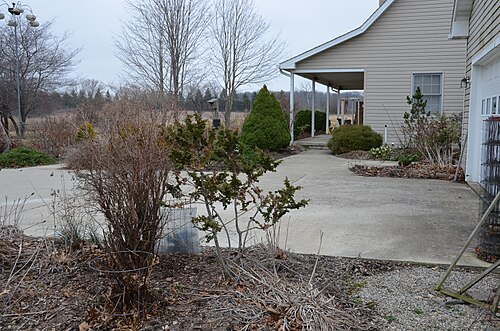
Fernspray Hinoki Falsecypress
Chamaecyparis obtusa 'Filicoides'
Year-rounddeep green
1 specimen — 6ft × 7ft · 6ft tall × 7ft wide
Completely distinct from other Hinoki varieties — 'Filicoides' produces long pendulous fern-like sprays of deep green foliage creating an open, cascading, almost mysterious character. Growing wider than tall, this heavy specimen creates a weeping textural accent unlike anything else in the collection.
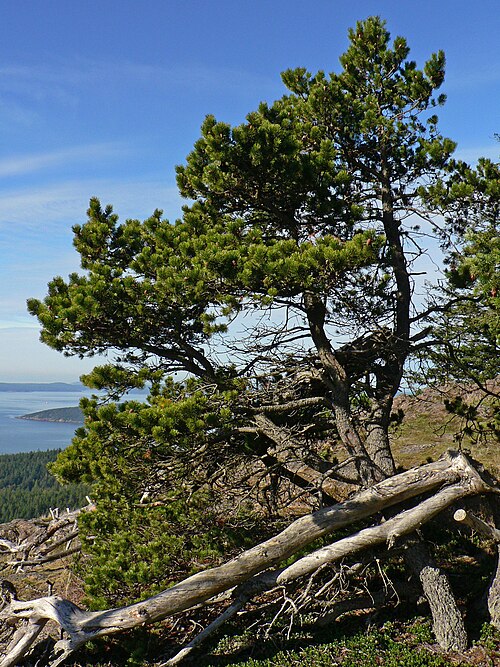
Contorted Shore Pine
Pinus contorta 'Contorta'
Year-rounddeep green
1 specimen — 7–8ft hindupan · 7–8ft (trained) · Slow-growing, maintains character
A sculptural tour de force — naturally twisted corkscrew branches with purposeful hindupan pruning create something between tree and living art. Dark needles spiral along gnarled branches in a manner that looks ancient and wind-shaped. Its silhouette against sky or a pale wall is unforgettable.
Structural Yews & Boxwood2
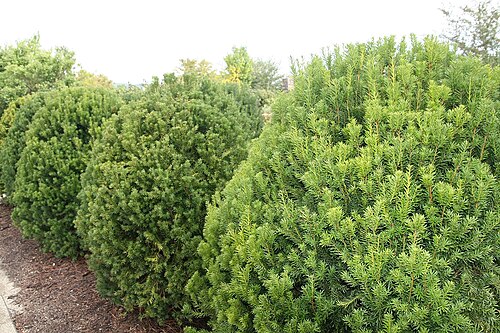
Hicks Yew
Taxus media 'Hicksii'
Year-roundred arils (female plants)
6 plants — 3–4ft · 8–12ft tall × 2–4ft wide · Columnar
The garden's scaffolding — upright, densely branching dark green needles forming natural columns. Incredibly tough, shade-tolerant, and salt-resistant. The dark yew is the color that makes every pale flower luminous by contrast.
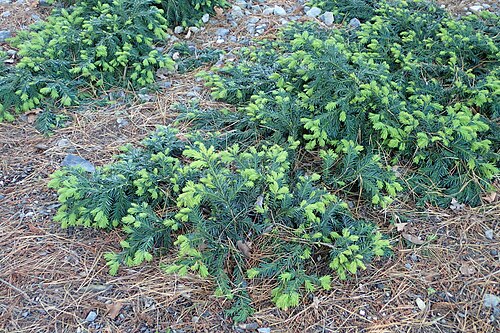
English Spreading Yew
Taxus baccata 'Repandens'
Year-rounddeep greenred
3 (7–8ft) + 2 (4–5ft) · 3–4ft tall × 6–10ft wide · Low spreading
The English yew in its low spreading form — growing wide and horizontal rather than vertical, creating dark evergreen groundplane structure. At 7–8ft the large specimens will be substantial sweeping presences. Jewel-like red arils in autumn add accent to the dark foliage. Large boxwood allowance ($12,000) plus original 12× 30in globe specimens. Dense evergreen globe forms and hedging throughout the rear garden providing permanent structural rhythm and the clean green backdrops against which all flowering plants perform.
Flowering Shrubs5
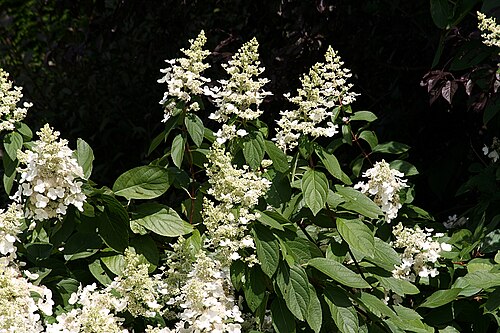
Tardiva Hydrangea
Hydrangea paniculata 'Tardiva'
Aug–Octpalelight red
6 (8–10ft) + 9 (3–4ft) + transplanted specimens · 8–10ft tall × 6–8ft wide (large specimens)
The late-blooming panicle hydrangea that delivers when the garden most needs it — August through October. Large pointed panicles open pure white and gradually blush to soft pink as temperatures cool in September, a beautiful seasonal progression. This is one of the garden's primary structural flowering shrubs, used in masses throughout the rear.
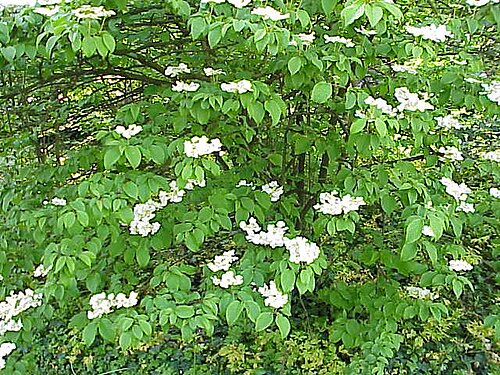
Popcorn Doublefile Viburnum
Viburnum plicatum tomentosum 'Popcorn'
May, Octwhitedeep red
1 (6–7ft) + 6 (10-gallon) · 8–10ft tall × 10–12ft wide · Horizontal tiered habit
One of the most elegant flowering shrubs available — flat-topped white flower clusters appear to float like clouds over the distinctly tiered, horizontal branching. The layered branching structure remains beautiful all season; fall color deepens to rich burgundy. Seven plants create a repeating rhythm through the rear garden.
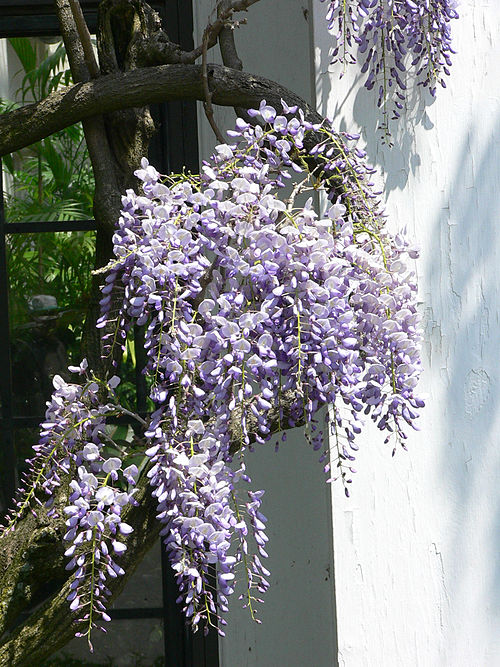
Pink Wisteria — Standard Form
Wisteria (trained standard)
Maylight magenta
3 standards · 5–6ft standard + crown
Three wisterias trained as lollipop standards — in May before the leaves fully emerge, the trained crowns transform into cascading globes of intensely fragrant pink-lavender clusters. The combination of formal structure (the trained standard) and extravagant bloom is quintessential English garden style. Annual pruning under the Marders maintenance program maintains the form.
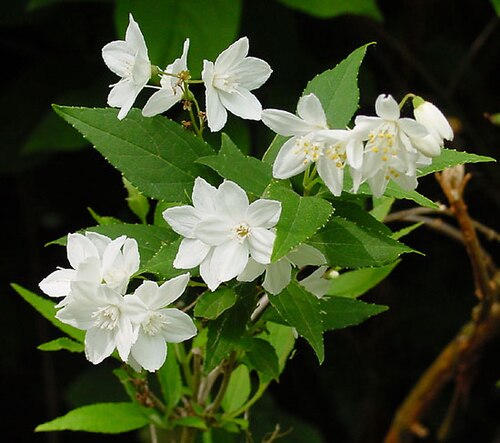
Yuki Snowflake Deutzia
Deutzia × rosea 'NCDX1'
May–Junwhite
20 plants · 2–3ft × 3–4ft
A compact gracefully arching deutzia flowering in profusion in late spring — branches covered entirely in small star-shaped white flowers. 'Yuki Snowflake' has a naturally tidy habit requiring minimal maintenance. Twenty plants massed as a border will create a unified white flowering band bridging spring and summer.
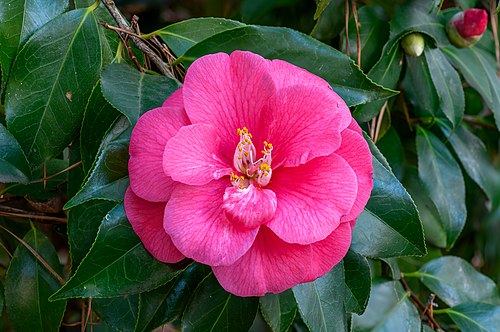
Camellia
Camellia spp.
Jan–Apr, Nov–Decredpale
Allowance — selections TBD with Lydia · 6–12ft · Broadleaf evergreen shrub
Camellias extend the garden's season dramatically — they bloom in late autumn through early spring when little else does. Waxy, perfect blooms in white, pink, or red against glossy evergreen foliage. The allowance will fund specimen-quality plants for sheltered positions in the rear garden.
Perennials — Blue & Blush13
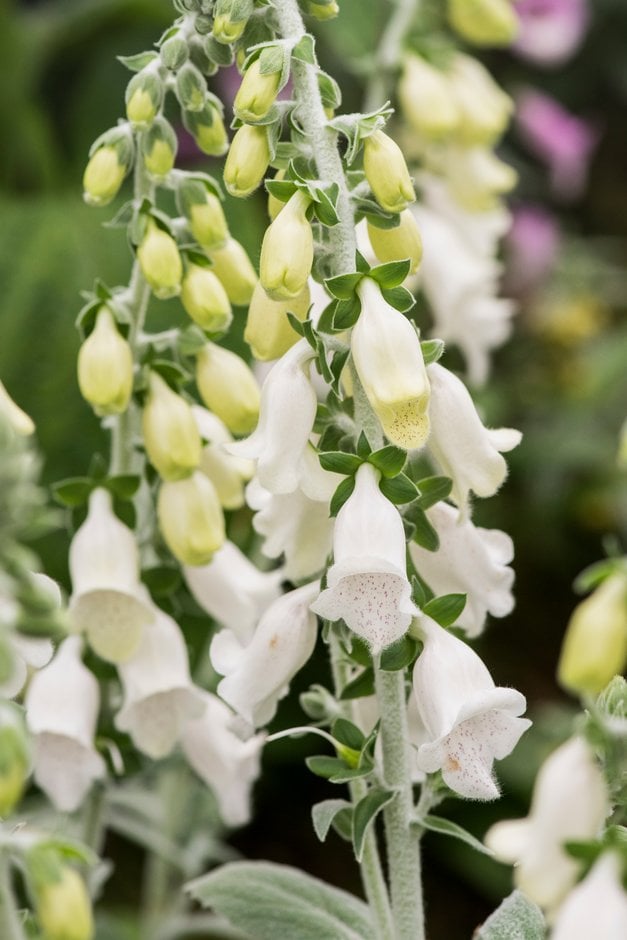
Foxglove 'Silver Fox'
Digitalis purpurea 'Silver Fox'
Jun–Julwhitelight yellow
4–5ft tall in flower
Luminous white foxglove spires with an unusually silvery-gray cast — almost metallic in certain light. The vertical exclamation marks of the border, rising above everything else. Self-sows freely to maintain a permanent presence.
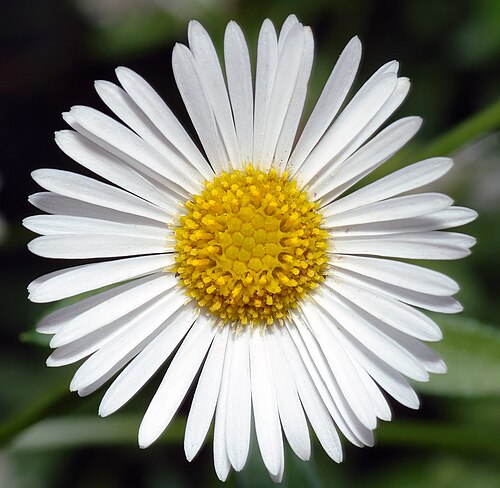
Fleabane 'Profusion'
Erigeron karvinskianus 'Profusion'
Jun–Octpalelight red
12in tall, spreading to 24in
Clouds of tiny daisy-like flowers opening white and aging through pink to rose — the plant carries all three shades simultaneously. Self-seeds into crevices and softens every hard edge. On the terrace it will thread through stone joints in exactly the romantic way that looks accidental but is entirely welcome.
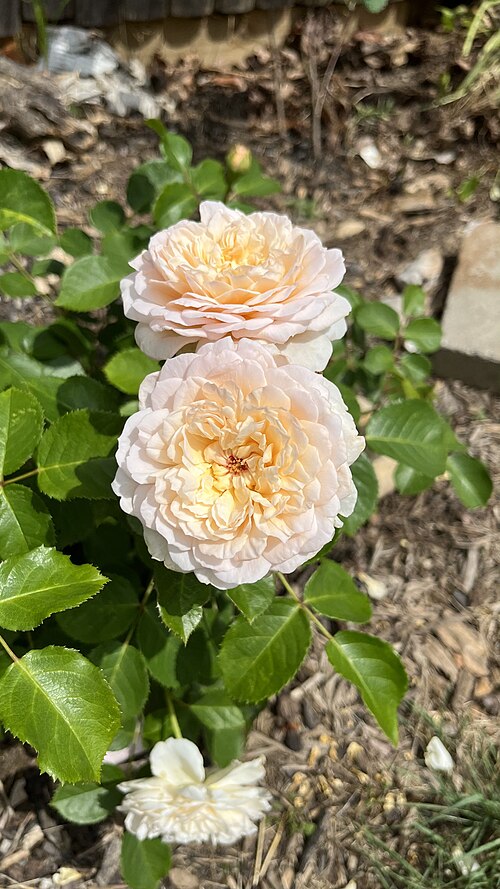
Rosa 'Emily Bronte'
Rosa 'Emily Bronte' (David Austin)
Jun–Seplight orange
4–5ft × 3–4ft · Repeat-flowering
The defining cultivar of the Blue & Blush choice — warm apricot-blush cupped blooms and strong tea-rose fragrance introducing warmth where the lavenders and salvias are cool and architectural. David Austin English rose of outstanding constitution. The 'blush' in Blue & Blush.
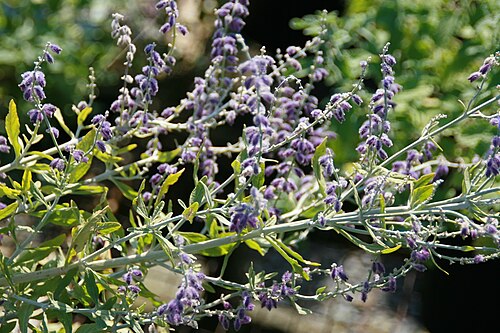
Russian Sage 'Little Spire'
Perovskia atriplicifolia 'Little Spire'
Jul–Seplight bluelight yellow
2–2.5ft × 2ft · Compact form
Gossamer haze of lavender-blue from midsummer — silvery-white aromatic stems and finely cut foliage are fragrant when touched, and the effect from a distance is of blue smoke drifting through the border. Drought-tolerant and magnificent in sandy Hampton soils.
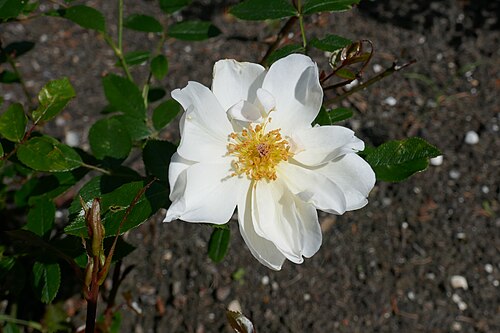
Rosa 'Crystal Fairy'
Rosa 'Crystal Fairy'
Jun–Seppale
Climbing to 8–12ft
White lace cascading clusters with faint blush center and classic old-rose fragrance. Used in both Front and Terrace palettes — the white constant that links the whole garden's color story together.
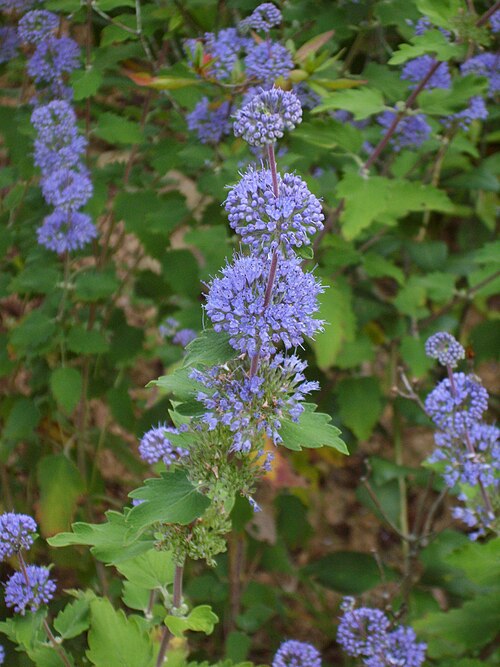
Caryopteris
Caryopteris × clandonensis
Aug–Octblue
2–3ft × 2–3ft
One of the most purely blue flowers in the garden — clean bright cobalt quite unlike the softer lavender-blues of salvia and perovskia. Blooms in late summer when that blue note is most needed. Bees and butterflies are magnetically attracted. Gray-green aromatic foliage is attractive from spring.
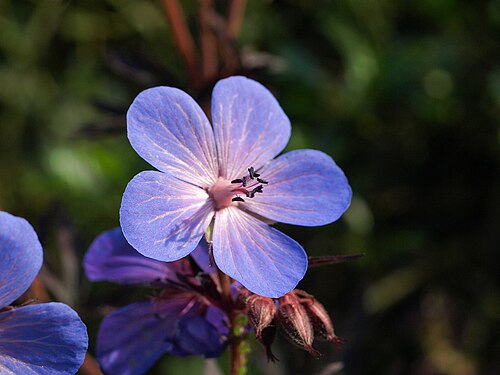
Geranium 'Rozanne'
Geranium 'Rozanne'
May–Octblue
18in tall × 24–36in wide · Sprawling
Six months of continuous violet-blue bloom from late spring to hard frost. Sprawls graciously through neighboring plants weaving them together. The thread that unifies the entire terrace planting. (Also used in Front borders.)
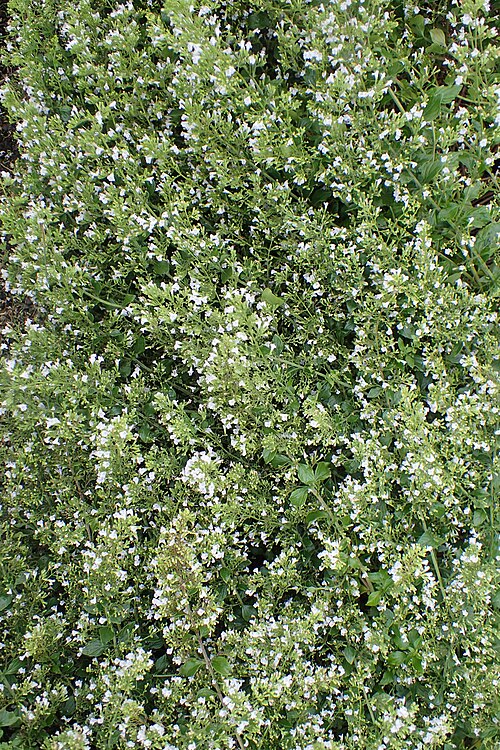
White Calamint 'Montrose White'
Calamintha nepeta 'Montrose White'
Jul–Octwhite
12–18in × 18–24in
A pure airy cloud of tiny white flowers above aromatic foliage from midsummer until frost. Distinguishes the terrace from the front (which uses the pale lavender form) — provides clean white notes bridging the blush tones of Emily Bronte and Crystal Fairy with the blues.
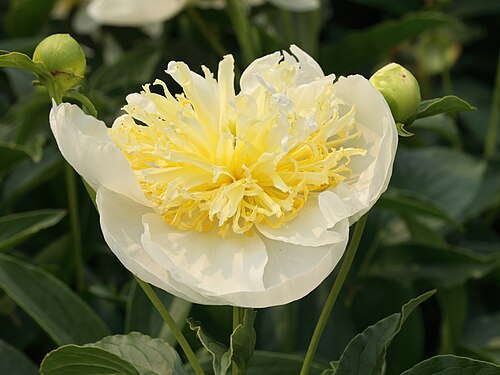
Peony 'Duchesse de Nemours'
Paeonia lactiflora
May–Junpalelight yellow
2.5–3ft × 3ft
Perhaps the most refined white peony — grown since 1856, its large, very double, utterly fragrant white flowers with creamy-yellow center age to pure ivory. Aristocratic restraint: luminous and serene rather than exuberant. Anchors the pale end of the Blue & Blush spectrum.
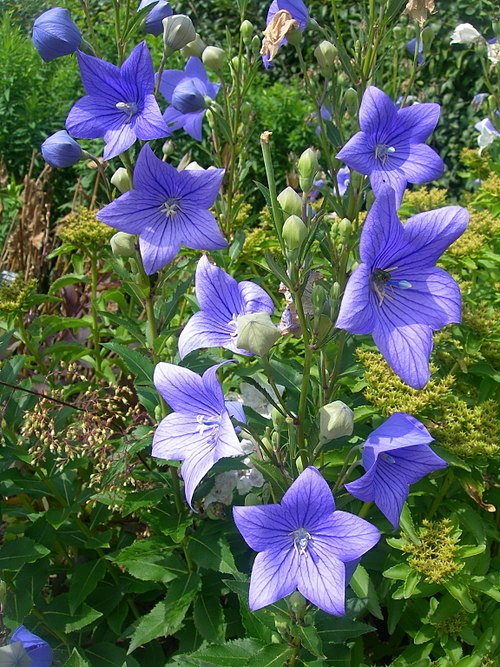
Balloon Flower
Platycodon grandiflorus
Jul–Augblue
18–24in × 18in
Buds inflate like small balloons before opening into wide star-shaped blue flowers — a particularly Japanese refinement in the midsummer border. Clear blue-violet that holds its color well in heat. Clump-forming, long-lived. Note: emerges late in spring — mark its position.
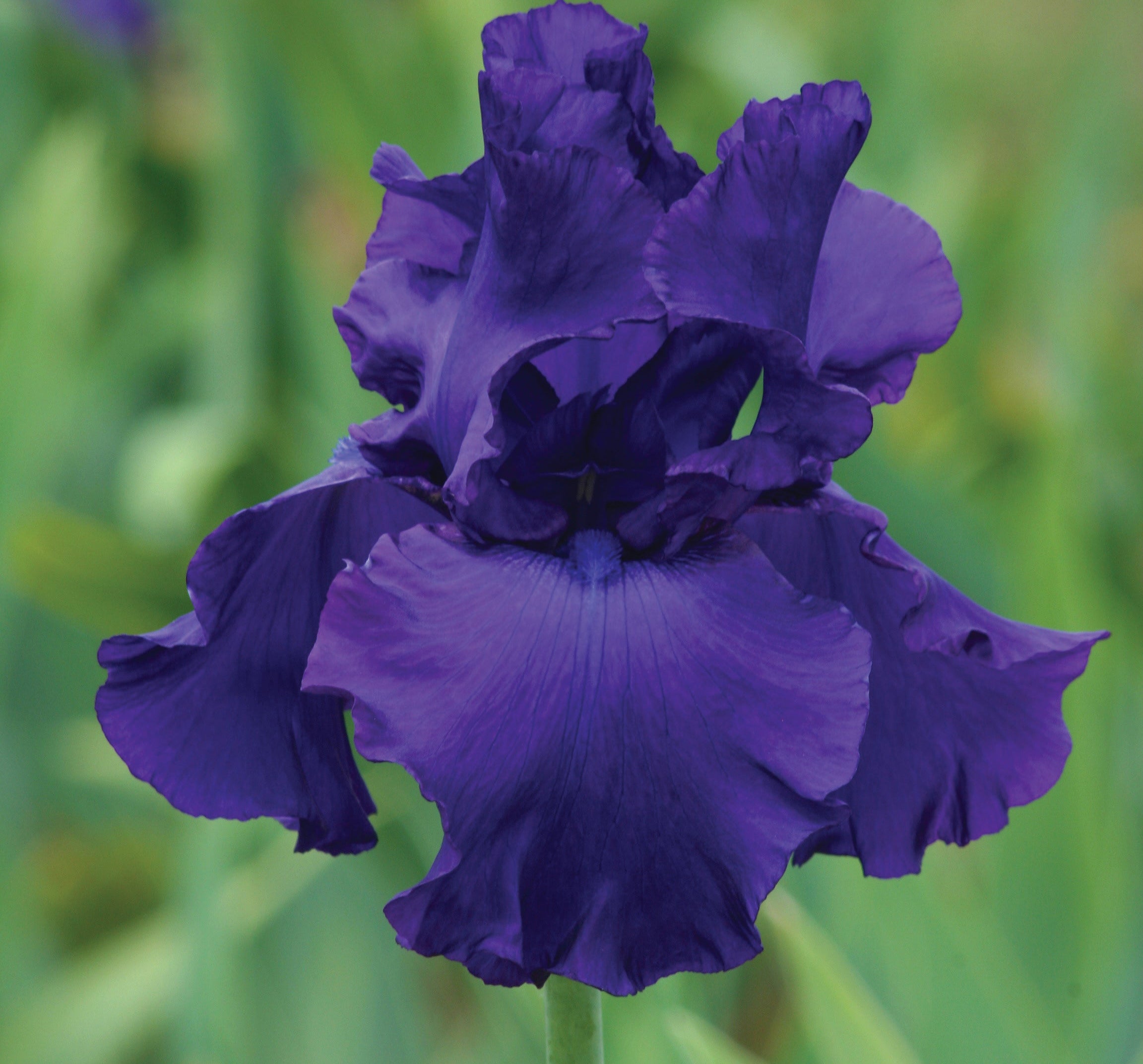
Iris 'Titans Glory'
Iris germanica
May–Jundeep violet
3–3.5ft tall
Enormous tall bearded iris in pure saturated violet-purple — genuinely electric in the late-spring border. Upright sword-like foliage provides architectural vertical structure all season. (Also used in Front borders.)

Isotoma
Isotoma axillaris
Jun–Seplight blue
8–12in × 10in · Border edge & crevice plant
Masses of small pale blue-lavender five-petaled stars on fine stems — a quiet, filmy edge effect that bridges gaps between larger perennials and softens transitions to paving. The visual equivalent of a rest note in music.
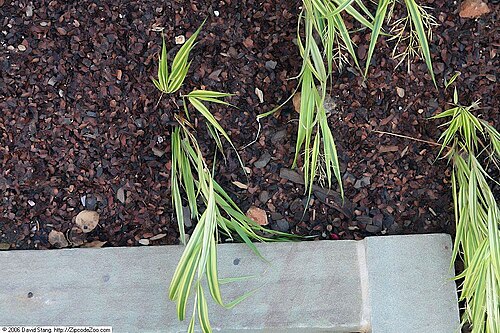
Japanese Forest Grass
Hakonechloa macra
Jan–Novchartreuseorange
18–24in × 24–30in · Spreads slowly
Cascading fountains of bright golden-green foliage that move in the slightest breeze like a living waterfall — the most graceful ornamental grass for a shaded or partially shaded position. Fall foliage turns orange and russet. Bold in form and delicate in movement simultaneously.
Relocated Specimens3
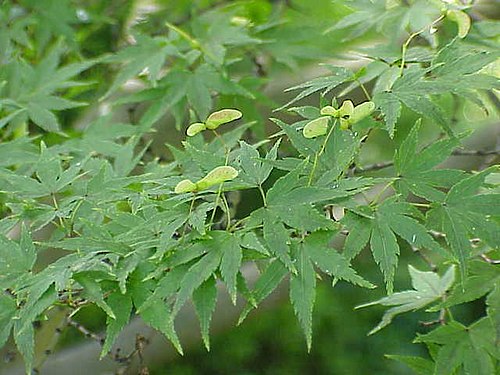
Japanese Maple
Acer palmatum
Mar–Apr, Oct–Novdeep redorange
×1 — repositioned within Middle Garden · 10–15ft × 10–15ft · Slow-growing; established character preserved
One of the great small trees of the cultivated landscape — fine-fingered palmate leaves of deep burgundy-red in spring and summer, exploding to scarlet and crimson in autumn. Moved a short distance within the Middle Garden to a more advantageous position, it retains all the character built up over years in place. The existing branch structure, already shaped by time, would take decades to replicate from nursery stock.
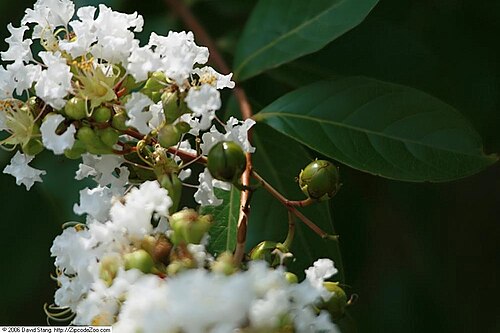
Natchez White Crape Myrtle
Lagerstroemia × 'Natchez'
Jul–Octwhitelight orange
×2 — relocated within Middle Garden · 20–30ft × 15–20ft · Established specimens; relocated with root ball
Two Natchez crape myrtles moved to new positions within the Middle Garden as part of the renovation — carrying their established trunk structure and cinnamon bark character with them. Natchez is the definitive white crape myrtle: large panicles of pure white flowers from July through October, vigorous growth, and outstanding disease resistance. In the middle garden they anchor the summer palette as the tallest flowering element.
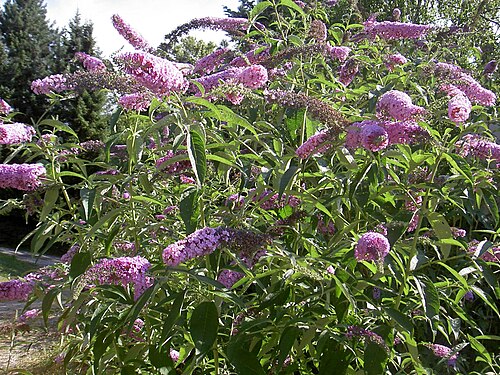
Butterfly Bush
Buddleja davidii
Jul–Octblueredwhite
×6 — relocated within Middle Garden · 6–10ft × 6–8ft · Cut hard in early spring; blooms on new wood
Six butterfly bushes relocated to new positions within the Middle Garden — arching shrubs carrying long tapering flower spikes in purple, pink, and white that draw Monarchs, Swallowtails, and Painted Ladies from midsummer through frost. Fast-growing and forgiving of hard pruning in early spring, they fill space generously and bloom on new wood each year. Among the most effective wildlife plants available for a garden of this scale.
Shade Garden · Lydia Willie Selection7
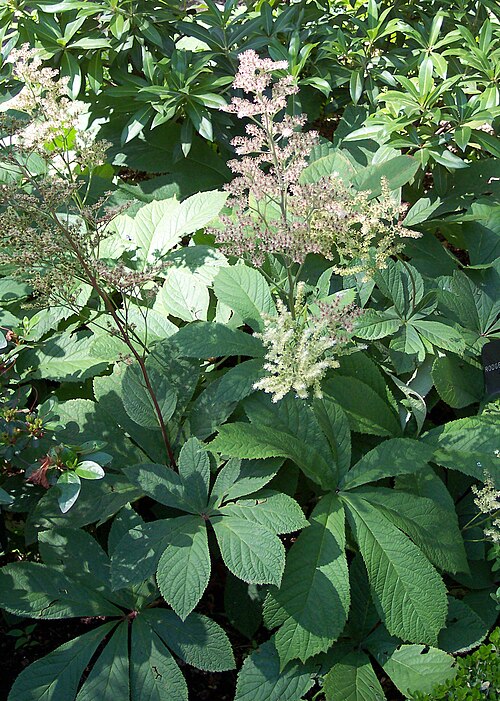
Rodgersia
Rodgersia aesculifolia
Jun–Jullight reddeep orange
3–5ft × 3–4ft · Needs consistent moisture; spectacular foliage
A bold architectural statement in damp shade: enormous bronze-tinged palmate leaves like those of a horse chestnut, rising to 3 feet, topped in midsummer with tall plumes of tiny creamy-pink flowers. Few plants command a shaded pool margin so authoritatively. The foliage is the main event — the flowers are a bonus. Thrives with consistent moisture and afternoon shade.
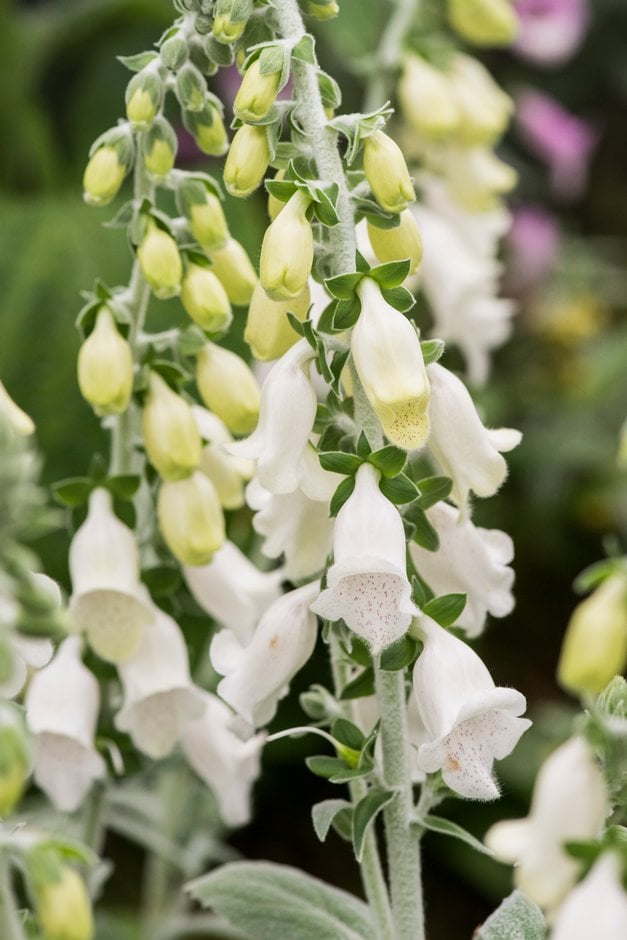
Foxglove 'Silver Fox'
Digitalis purpurea 'Silver Fox'
Jun–Julpalelight red
18–24in × 12in · Biennial grown as annual; self-seeds reliably
A compact foxglove bred for shade tolerance, bearing soft pink-mauve tubular bells with deep-spotted throats in early summer. Where the species can lean and topple in woodland conditions, 'Silver Fox' stays upright and bushy — ideal for the more contained shade garden. The spotted interior of each flower is an invitation to lean in and look closely.

Hosta 'Humpback Whale'
Hosta 'Humpback Whale'
May–Julgreenlight green
3–4ft × 4–6ft · Specimen scale; slug-resistant texture
A giant among hostas — one of the largest varieties, with deeply corrugated blue-green leaves that can exceed two feet in length. The puckered, wavy surface catches light beautifully, creating movement and texture in still shade. Pale lavender flower spikes emerge in early summer. A single specimen becomes a destination in a shaded border; a grouping is a landscape event.
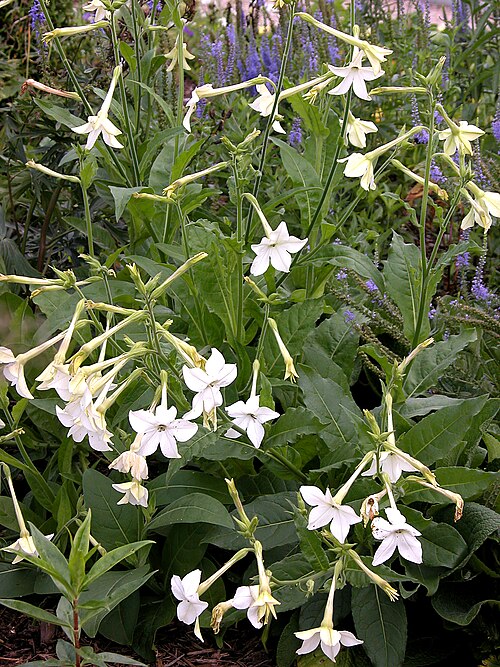
Flowering Tobacco
Nicotiana alata
Jun–Sepwhitepale
3–5ft × 18in · Evening fragrance; tolerates part shade
Tall, airy stems carrying tubular white or soft blush flowers that release an intoxicating jasmine-like fragrance in the evening — designed to be noticed at dusk and after dark. Thrives in partial shade where most summer annuals sulk. A garden that is used in the evenings needs Nicotiana; there is no substitute for what it does to the air around a terrace at nightfall.

European Wild Ginger
Asarum europaeum
Apr–Maydeep green
4–6in × spreading · Evergreen; slow to establish, permanent thereafter
A slow-spreading evergreen groundcover making a dense, glossy carpet of kidney-shaped leaves — the darkest, most polished green available in a shade plant. Tiny hidden flowers appear under the foliage in spring, almost irrelevant beside the year-round elegance of the leaf. Nothing carpets the ground under a Japanese Maple more beautifully. Stays tidy indefinitely once established.

Masterwort 'Shaggy'
Astrantia major 'Shaggy' (syn. 'Margery Fish')
Jun–Augwhitelight red
24–30in × 18in · Excellent cut flower; reblooms if deadheaded
One of the most intricate flowers in the herbaceous border — a pincushion of tiny florets surrounded by a starburst of papery white bracts tipped in green, the whole effect like a botanical illustration come to life. 'Shaggy' has especially long bracts that give it an unusually elegant, attenuated look. Ideal for cutting; thrives in the damp shade it prefers. Among Lydia's defining shade palette choices.

Japanese Anemone 'Honorine Jobert'
Anemone × hybrida 'Honorine Jobert'
Aug–Octwhiteyellow
3–4ft × 2–3ft (spreading) · Late-season; tolerates dry shade once established
Pure white single flowers with golden stamens, floating on wiry stems above deeply cut dark green foliage — among the most refined of all late-season perennials, and uniquely valuable for the shade garden. Blooms from August through October when most shade plants have finished for the year. An heirloom variety in continuous cultivation since 1858; its longevity is its own recommendation.
Orchard Garden · Fruit Trees & Lydia Willie Palette2
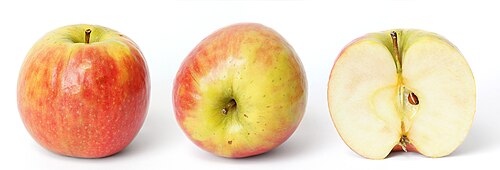
Edible Apple
Malus domestica
May, Sep–Octlight redred
×1 — new planting (PQ03692) · 15–25ft × 15–20ft · Organic care program 15 visits/year
The anchor of the orchard garden: soft pink-white blossom in May, followed through summer by the quiet labor of fruit development, then the harvest drama of September and October. Under the Marders Organic Fruit Tree Care Program (15 visits annually), this apple will receive fertilization, pest management, and targeted pruning throughout the season — making the difference between a decorative tree and a genuinely productive one.
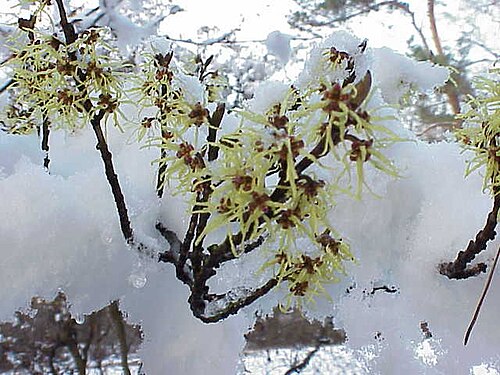
Witch Hazel
Hamamelis × intermedia
Jan–Mar, Oct–Novorangeorange
×1 — new planting (PQ03692) · 10–15ft × 10–15ft · Fragrant; blooms Jan–Mar on bare wood
The season's most extraordinary performer: ribbony, spidery yellow, orange, or copper flowers that emerge on bare branches in the depths of winter — January through March — carrying a warm spice fragrance detectable yards away. No other woody plant blooms when the garden is this cold. Autumn foliage is equally spectacular. In the orchard garden it becomes the winter presence that gives the space a reason to visit year-round.
Orchard Garden Perennials · Lydia Willie Selection — Fixed Palette16
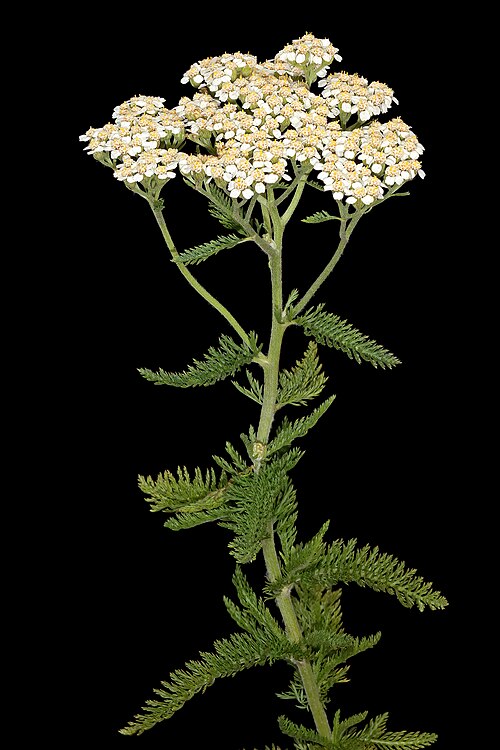
Yarrow 'Lilac Beauty'
Achillea millefolium 'Lilac Beauty'
Jun–Sepvioletlight violet
24–30in × 18–24in · Drought-tolerant; deadhead for rebloom
Flat-topped flower plates of soft lilac-mauve that fade gracefully to pale buff as summer progresses, providing months of color from a single flush. Fine ferny foliage is aromatic when brushed. A reliable, long-blooming workhorse that fills the middle of an orchard border with quiet charm. Attracts beneficial insects; tolerates heat and drought once established.
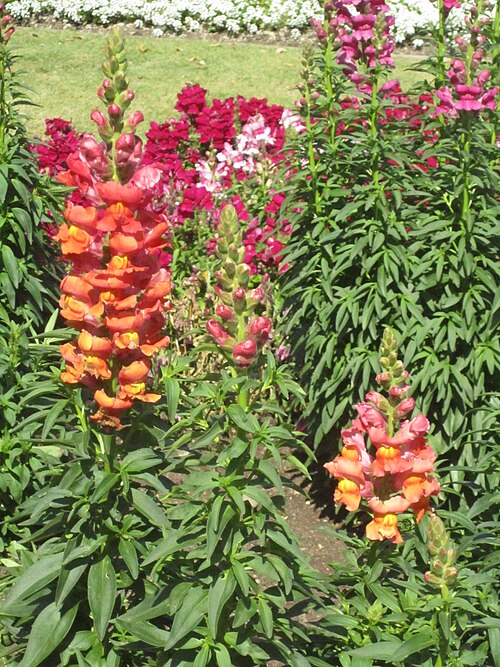
Snapdragon 'Chantilly Light Salmon'
Antirrhinum majus 'Chantilly Light Salmon'
Jun–Auglight orangered
24–30in × 10–12in · Cool-season; best spring and early summer
The 'Chantilly' series produces open-faced flowers without the traditional closed "snap" lip — wider, more airy, and arguably more beautiful than the classic form. Light salmon carries enough warmth to bridge between the cooler blues and the deeper pinks in the orchard palette. Tall stems (to 30 inches) make them excellent for cutting. A cottage garden classic with a refined modern edit.
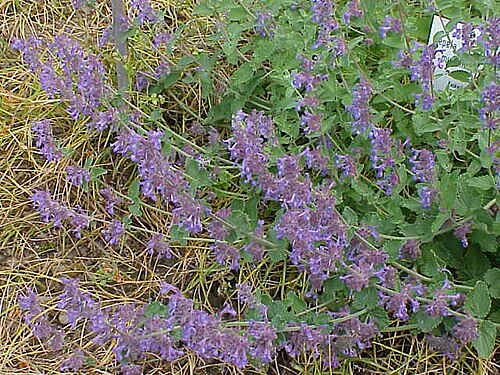
Catmint 'Walker's Low'
Nepeta × faassenii 'Walker's Low'
Jun–Sepbluelight blue
18–24in × 24–30in · Cut back after first flush for rebloom; deer-resistant
The essential blue-purple mass planting of the English-style border: cascading mounds of small silvery-green leaves smothered in lavender-blue flower spikes from early summer, reblooming strongly if cut back after the first flush. Deer-resistant, drought-tolerant, pollinator magnet, and effortlessly beautiful. Perennial of the Year for a reason — Lydia's orchard palette leans on it as its backbone blue.
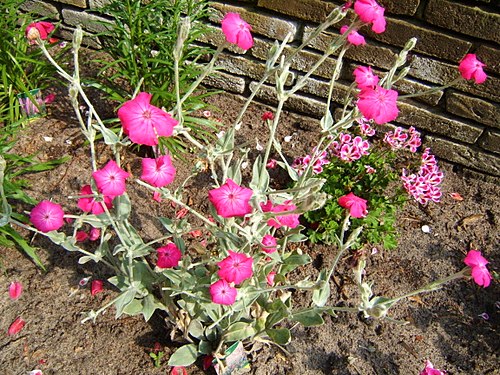
Rose Campion
Lychnis coronaria 'Alba'
Jun–Augwhitelight blue
24–36in × 12–18in · Self-seeds; silver foliage is the main feature
White-flowered magenta's cooler sibling — pure white saucers held above felted silver-grey foliage on branched, upright stems. The grey leaf is the key: it ties together all the other palette colors and provides luminosity in the evening garden. A biennial that self-seeds reliably, maintaining its presence without intervention. Its silver-white combination works as a natural neutralizer among stronger orchard colors.
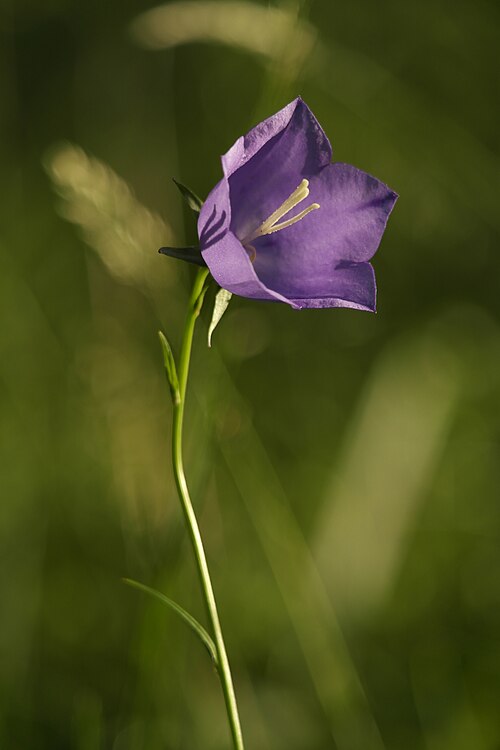
Bellflower 'Telham Beauty'
Campanula persicifolia 'Telham Beauty'
Jul–Augbluelight blue
30–36in × 12–18in · Superb cut flower; deadhead to prevent self-seeding
Large, open lavender-blue cups of exceptional size (to 2 inches across) on tall, slender stems — an heirloom variety that has never been superseded for sheer elegance. The flowers are large enough to read clearly from a distance and refined enough to reward a close look. Excellent for cutting; self-seeds without becoming invasive. Among the most aristocratic of all bellflowers.
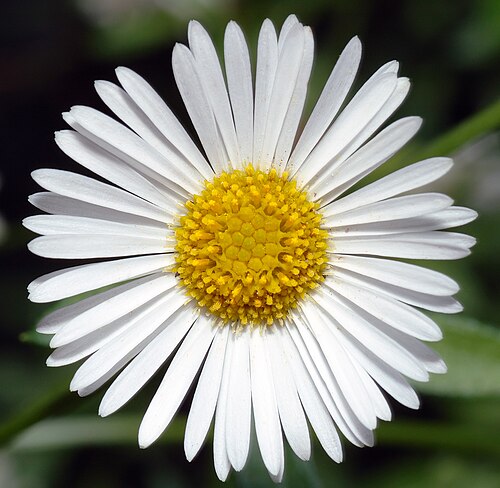
Fleabane 'Profusion'
Erigeron karvinskianus 'Profusion'
Jun–Octwhitered
10–12in × 18–24in (spreading) · Blooms June–frost; self-seeds freely
Tiny daisy flowers that open white and age to rose-pink, creating a perpetual two-tone effect on cascading, fine-stemmed mounds that bloom almost without pause from June to frost. A filler without peer — it softens edges, spills over walls, and threads between larger plants with an effortless, naturalistic quality. A single plant looks accidental; a drift of them looks inevitable.
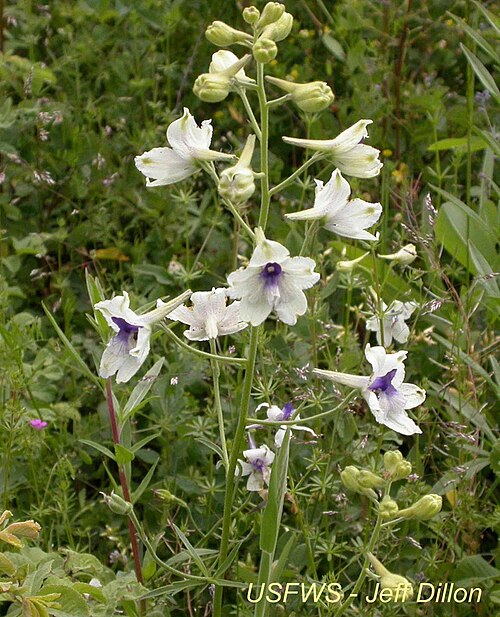
Delphinium 'Guardian White'
Delphinium elatum 'Guardian White'
Jul–Augwhitepale
4–5ft × 18in · Requires staking; cut back for second flush
Towering white spires that command the back of the orchard border in high summer — vertical architecture that nothing else in the perennial palette provides. White delphiniums are rarer and more elegant than their blue cousins; they catch evening light and glow at dusk. The 'Guardian' series is more weather-resistant than older hybrids. Staking required, but the effect is worth every effort.
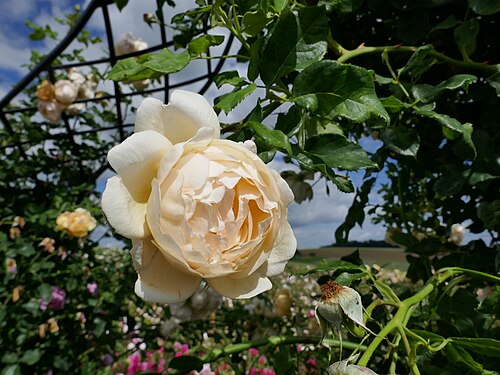
Rose 'Wollerton Old Hall'
Rosa 'Wollerton Old Hall' (David Austin)
Jun–Seplight orangelight orange
4–5ft × 4ft · Repeat flowering; strong myrrh fragrance
A David Austin shrub rose of the highest quality: large, deeply cupped flowers of warm apricot fading to cream, with a powerful myrrh fragrance that announces itself from ten feet away. One of Austin's most reliably repeat-flowering varieties, carrying through from June to the first frost. In the orchard setting, the warm apricot bridges perfectly between the whites and the pinks of the palette.
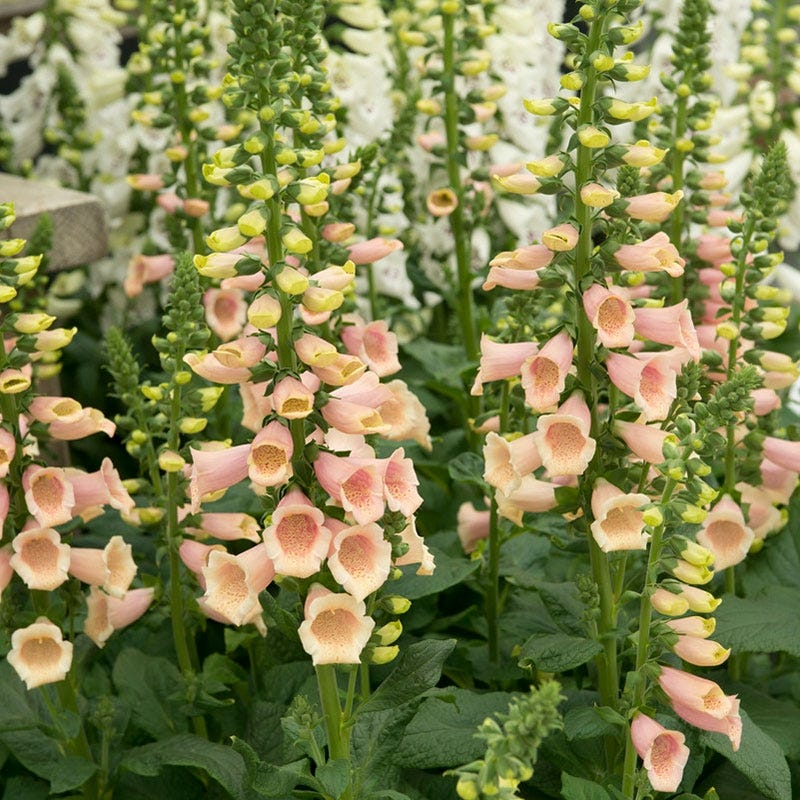
Foxglove 'Apricot Beauty'
Digitalis purpurea 'Apricot Beauty'
Jun–Jullight orangeorange
4–5ft × 18in · Biennial/short-lived perennial; self-seeds readily
Soft apricot-peach tubular bells spotted within — a warmer, more unusual coloring than the standard white or purple foxglove. Exceptional in a garden that mixes English-style pastel with warm Mediterranean tones. Tall spires command vertical space in early summer before the roses fully open. Self-seeds freely; a colony establishes naturally and perpetuates without replanting.
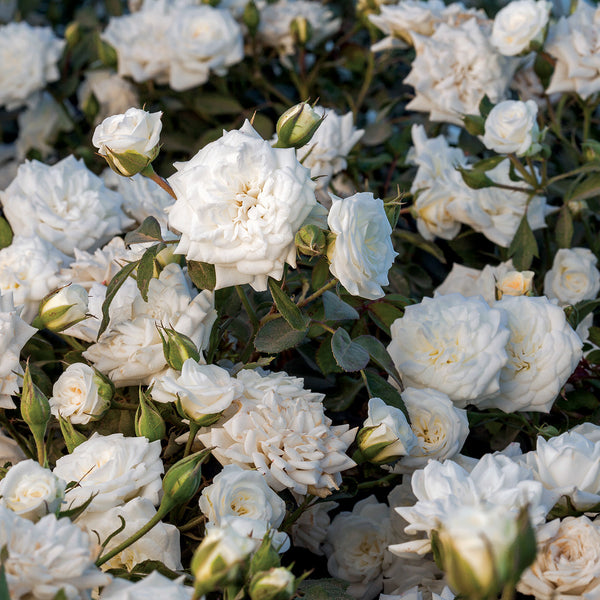
Rose 'White Drift'
Rosa 'White Drift'
Jun–Octwhitepale
18in × 30in (spreading) · No deadheading needed; disease-resistant
A low, spreading groundcover rose that covers itself in small clusters of pure white flowers from early summer to frost with almost no maintenance — no deadheading required, excellent disease resistance, and spreading habit that covers ground and suppresses weeds. The ideal edging rose for an orchard garden: it ties the border to the ground plane and provides continuous white through the longest season of any rose in the palette.
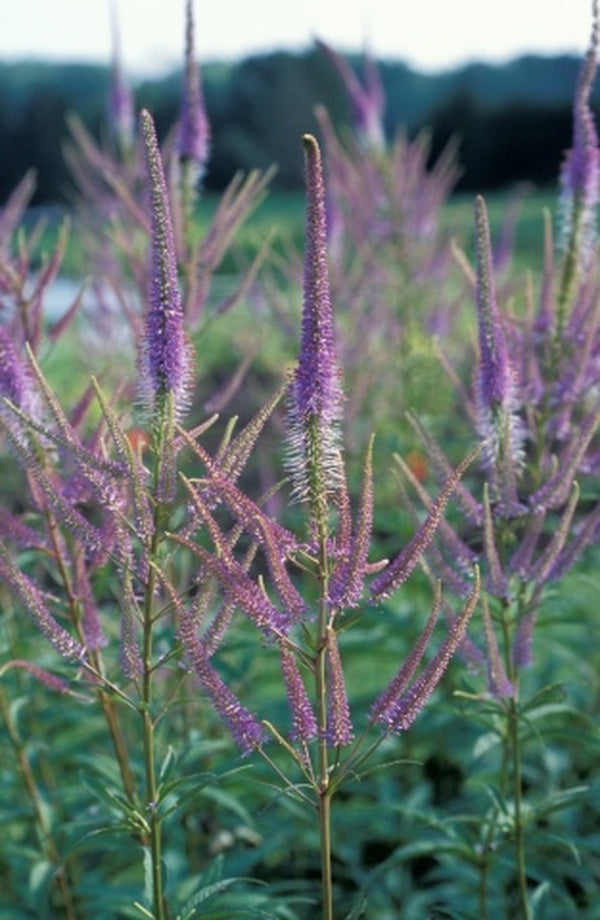
Culver's Root 'Pink Fascination'
Veronicastrum virginicum 'Pink Fascination'
Jul–Sepredlight red
4–5ft × 18–24in · Mid-late summer; architectural vertical form
Elegant tall wands of tiny soft-pink flowers arranged in branching, candelabra-like spires — providing vertical rhythm in mid-to-late summer when many perennials are between flushes. Leaves arranged in neat whorls around the stem make the plant attractive even before flowering. Attractive to bees and butterflies; the dried seedheads persist attractively into winter.
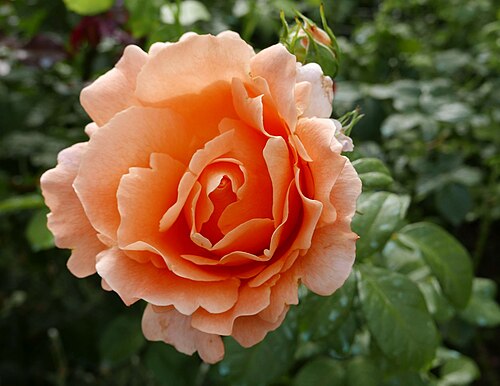
Rose 'Polka'
Rosa 'Polka' (Meilland, climbing)
Jun–Seporangeorange
10–12ft climbing · Train on trellis; café nook rose structure
A vigorous climbing rose with fully double flowers of warm apricot-salmon — large, high-centered in the classic exhibition form — carried abundantly on long arching canes. At the café nook rose trellis, 'Polka' will train across the structure and cascade generously, creating the effect of an enclosed floral room. Moderately fragrant; repeat-flowering through summer. Among the most reliably beautiful climbers for an outdoor dining setting.
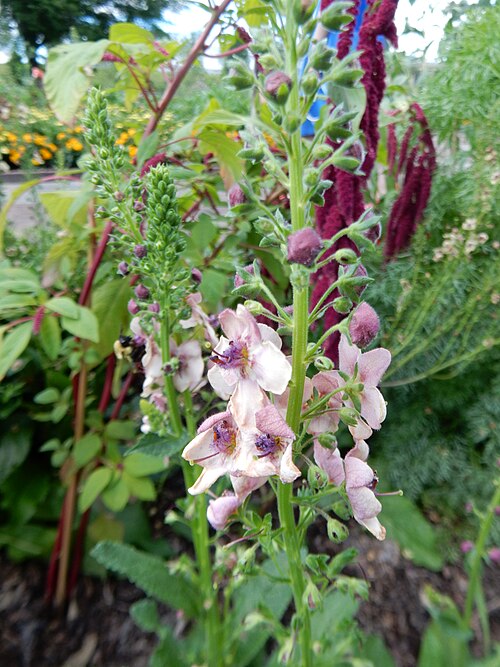
Mullein 'Southern Charm'
Verbascum 'Southern Charm'
Jun–Auglight orangeorange
24–30in × 18in · Short-lived perennial; self-seeds; drought-tolerant
Compact, branched spires carrying saucer-shaped flowers in a blend of biscuit, peach, and rose — the palette is one of the most unusual and painterly in any garden plant. 'Southern Charm' holds its branched, bushy form without the gawkiness of the species. A sophisticated cottage-garden plant that bridges warm and cool tones simultaneously.
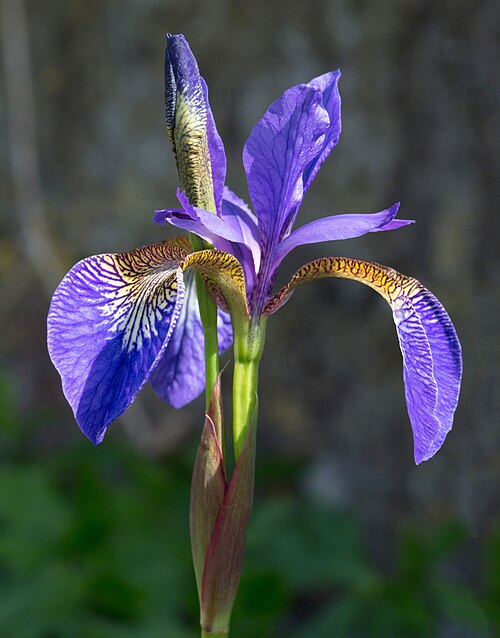
Bearded Iris 'Sugar Blues'
Iris germanica 'Sugar Blues'
Junblueblue
30–36in × 18in · Blooms 2–3 weeks in June; foliage structural year-round
Ruffled medium-blue flowers with a white beard — the archetypal blue bearded iris, providing the clearest blue note in the early-summer orchard garden before the catmint and bellflowers take over. The sword-like grey-green foliage remains attractive after bloom as a structural element. Brief-blooming but memorably beautiful for its moment; pairs naturally with alliums and early roses.
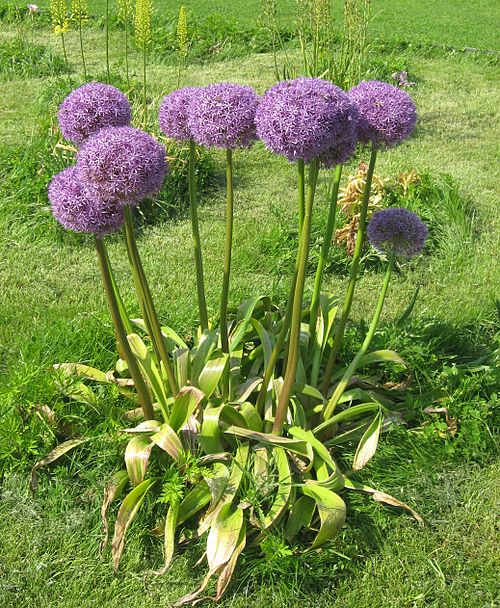
Ornamental Allium
Allium hollandicum / A. 'Purple Sensation'
Junblueviolet
24–36in · Spring bulb; plant in fall; seedheads persist decoratively
Perfect globe-shaped flower heads of deep purple-violet, each composed of dozens of tiny star-shaped florets, held on perfectly straight stems above dying foliage — one of spring's most architectural moments. Plant bulbs through the face of the border for a naturalistic effect; the dying foliage hides behind emerging perennials. The dried spherical seedheads are ornamental well into summer.
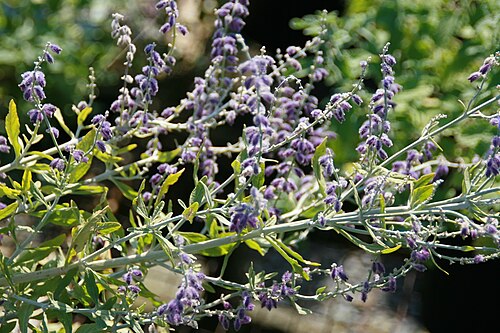
Russian Sage
Perovskia atriplicifolia
Jul–Octbluelight blue
3–5ft × 2–3ft · Cut hard in spring; blooms mid-summer to frost
Tall airy columns of tiny lavender-blue flowers on silver-white stems — a haze of color from mid-summer to frost that reads as pure blue from a distance and reveals silver on close inspection. Wildly heat and drought tolerant; actually performs better in lean, dry conditions. The silver stem color is nearly as valuable as the flower. One of the essential late-season plants for any perennial border with a blue-and-silver scheme.
Side Terrace & Patio2
Confirmed Plantings2
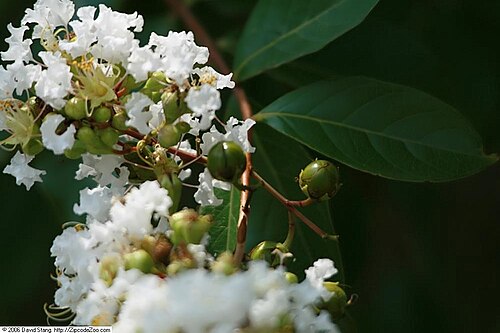
Crape Myrtle (Espalier) — Patio
Lagerstroemia indica — espalier-trained
Jul–Octredred
Allowance — PQ03692 · Wall-trained to 8–12ft · Allowance — final selection TBD
Crape Myrtle trained flat against a wall or fence as an espalier — a more formal, architectural presentation of the same prolific summer bloomer found as a free-standing tree in the pool garden. Espaliered against a warm wall, the cinnamon bark and summer flower panicles become a vertical garden element of considerable elegance. Final variety and color to be confirmed with Marders at installation.
Espalier — Patio Walls
Species TBD (allowance item)
green
Allowance — PQ03692 · Wall-trained · Species and configuration TBD
An allowance for espalier plantings on the patio walls — species and variety to be confirmed with Marders. Candidates include pear (for spring blossom and autumn fruit), fig (for the Mediterranean feel and large architectural leaf), or pyracantha (for year-round interest including winter berries). Espalier is one of the highest-impact uses of wall space in a walled garden: flat, formal, and unforgettable.
Pool Back Garden2
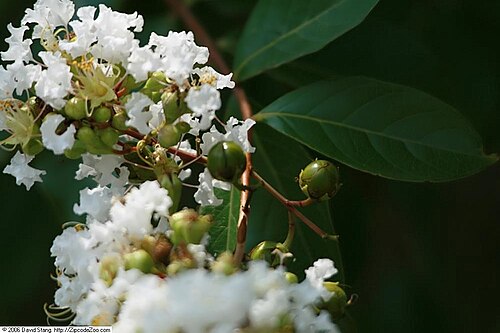
Natchez White Crape Myrtle
Lagerstroemia × 'Natchez'
Jul–Octwhitelight orange
×10 — existing specimens · 20–30ft × 15–20ft · Existing established specimens; no changes planned
Ten established Natchez crape myrtles form the defining canopy structure of the pool back garden — a summer-long display of large pure white flower panicles above exfoliating cinnamon bark. Natchez is the gold standard of white crape myrtles: vigorous, disease-resistant, and capable of reaching 20–30 feet with impressive trunk caliper over time. Together they create an outdoor room of considerable presence around the pool.
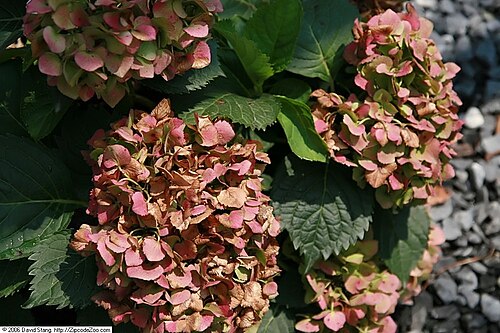
Bigleaf Hydrangea
Hydrangea macrophylla (old wood bloomers)
Jul–Sepbluemagenta
Existing — unchanged · 4–6ft × 4–6ft · Old-wood bloomer — do not cut back in fall
The established mophead hydrangeas of the pool garden bloom reliably on old wood each summer — large rounded flower heads in blue, pink, or purple depending on soil pH. These plants are not being disturbed; their age and root systems give them a vigor and flower count that new plantings cannot match. The dried flowerheads in autumn and winter are quietly ornamental, worth leaving on the plant until spring pruning.
Containers1
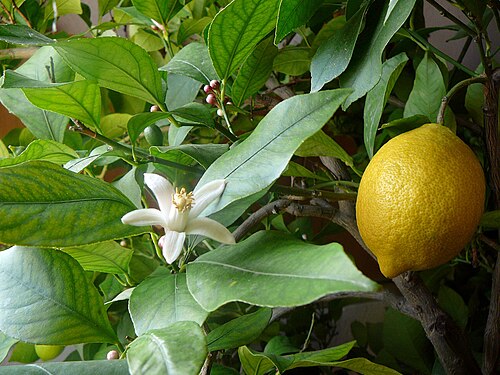
Lemon Tree
Citrus limon — 30-gallon specimen
Year-roundyellowwhitechartreuse
Texel white planter · 6–8ft in container · Bring indoors before first frost; full sun required
A large 30-gallon lemon specimen in a Texel white planter — the classic Mediterranean terrace accent that signals leisure, generosity, and warmth. Waxy white fragrant blossoms and bright yellow fruit may appear simultaneously on the same tree, one of nature's more extravagant tricks. Overwinters indoors in a frost-free, bright location. The Texel planter is a simple, substantial white form that lets the tree speak without competing. On a terrace overlooking the Southampton garden, nothing more is needed.
Appendix — Bloom Calendar
| January | Witch Hazel (fragrant yellow-orange, bare branches) |
| February | Witch Hazel (continuing) |
| March | Witch Hazel (final weeks) · Japanese Maple (emerging red leaf) |
| April | Ornamental Allium (bulbs emerging) · Edible Apple (pale pink blossom) · Wild Ginger (hidden flowers) · Popcorn Viburnum (white lace) · Wisteria Standard (pink/lavender) · Seven Son Tree (leaf-out) |
| May | Allium 'Purple Sensation' (deep purple globes) · Bearded Iris 'Sugar Blues' · Edible Apple (blossom) · Kousa Dogwood (beginning) · Andromeda (lingering) · Deutzia 'Yuki Snowflake' · Lemon Tree (white flowers) |
| June | Peak early summer: Catmint · Bellflower 'Telham Beauty' · Rose 'Wollerton Old Hall' · Rose 'Polka' (climber) · Rose 'White Drift' · Foxglove 'Silver Fox' & 'Apricot Beauty' · Snapdragon 'Chantilly' · Astrantia · Yarrow · Erigeron (starting) · Delphinium 'Guardian White' · Blue Wave & Nikko Blue Hydrangea (bud) · Lemon Tree (fruit forming) |
| July | High summer: Blue Wave & Nikko Blue Hydrangea (full bloom) · Natchez Crape Myrtle (white panicles) · Crape Myrtle pool specimens · Tardiva Hydrangea (beginning) · Butterfly Bush · Rodgersia · Catmint (rebloom) · Russian Sage · Veronicastrum · Erigeron · Nicotiana (evening fragrance) · Lychnis alba · Coneflower 'Magnus' · Isotoma · Salvia |
| August | Tardiva Hydrangea (peak white panicles) · Japanese Anemone 'Honorine Jobert' (opening) · Butterfly Bush · Russian Sage · Veronicastrum · Erigeron · Nicotiana · Coneflower · Salvia · Fleabane · Rose repeat flushes |
| September | Japanese Anemone (peak) · Tardiva Hydrangea (aging to pink-buff) · Russian Sage · Erigeron · Butterfly Bush · Crape Myrtle (late color) · Seven Son Tree (fragrant white flowers — the September surprise) · Apple harvest |
| October | Japanese Anemone (final) · Seven Son Tree (fruit turning metallic purple) · Japanese Maple (autumn crimson) · Hakonechloa macra (orange-russet) · Witch Hazel (first hints) · Apple harvest |
| November | Japanese Maple (late autumn color) · Hydrangea dried flowerheads (persistent) · Evergreen structure: Hinoki Falsecypress · Hicks Yew · Japanese White Pine · Boxwood |
| December | Evergreen structure only · Witch Hazel (buds swelling) · Dried hydrangea heads · Honeylocust golden fall color (early Dec) · Garden at rest — bones visible |